Our Blog

Three Reasons We're Fans of Fluoride

May 23rd, 2025

Why all the fuss about fluoride? Your dentist recommends it, your toothpaste is formulated with it, most of our drinking water contains it. Just what is it about this mineral that makes dental professionals sing its praises? Read on for three good reasons why fluoride is a healthy choice for healthier teeth.

  1. Fluoride Works!

Fluoride is an attractive option for protecting your teeth—and we mean that literally. Fluoride protects the surface of your teeth by working on a molecular level to attract minerals which strengthen enamel and help prevent cavities.

Our tooth enamel is mostly made from calcium and phosphate ions. These elements combine to form hydroxyapatite, strong crystals which make up about 95% of our enamel. Hydroxyapatite is so strong, in fact, that tooth enamel is the hardest part of our bodies. What can go wrong?

Acids. Acids created by the bacteria in plaque and the acids in our diet strip away the calcium and phosphate ions in enamel, weakening the surface of the tooth. This process is called demineralization. Over time, weak spots become bigger as acids eat through enamel to the inner tooth, causing decay and cavities.

So, what can fluoride do?

First, fluoride helps remineralize tooth enamel. Fluoride is attracted to the tooth’s surface and bonds with its minerals. It also attracts the calcium and phosphate ions that are found in our saliva to restore any minerals that have been lost. This process helps repair any weak spots that might have begun to form.

But fluoride does more than restore and repair tooth strength—it improves it! Fluoride ions join with calcium and phosphate to form fluorapatite crystals, which are larger and stronger than hydroxyapatite crystals. Even better? These new crystals are more resistant to acids.

  1. Fluoride Is Doubly Effective

Fluoride works both externally and internally. We just looked at how fluoride helps keep teeth strong when applied to the outside of the teeth. This is called a topical application. Systemic benefits come the fluoride we consume in our diets.

Fluoride isn’t found in many foods, but it is found naturally in lakes, rivers, and other water sources. When the local water’s fluoride level is low, many communities add fluoride for its proven ability to prevent cavities. Water fluoridation is safe, has been studied for decades, and has been shown to reduce the risk of cavities by 25% or more for both children and adults.

Systemic fluoride was important when you were younger and still had your baby teeth. This is because fluoride joined with minerals in your adult teeth while they were growing and developing, creating stronger, more cavity-resistant teeth even before they erupted.

And now that your permanent teeth are here, you’re still in luck! When you drink fluoridated water, you’re increasing the amount of fluoride in your saliva. Just like fluoride toothpaste, saliva bathes your teeth with fluoride ions, remineralizing and strengthening the tooth surface and helping repair weak spots in your enamel.

  1. It’s Easy to Get Fluoride Protection

Because so much of our drinking water is fluoridated, most of us really don’t have to think about how to get the recommended amount of fluoride in our diet each day. If your community’s water is low in fluoride, Dr. Todd Hamilton and Dr. Bryan Whitecotton can help you. Prescription fluoride rinses, gels, supplements, and other treatments are available at our Denver, NC orthodontic office to make sure that your teeth are well-protected, wherever you may live. We will let you know which products are best for you and how often to use them.

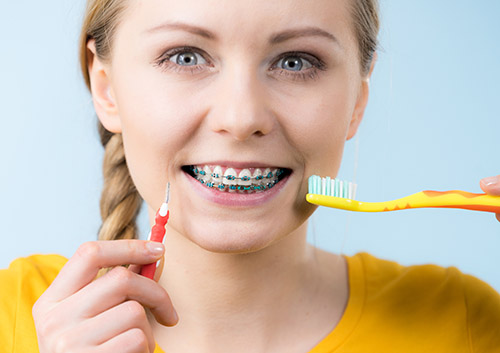
Most toothpastes are formulated with fluoride, so you’re getting the enamel-strengthening benefits of this mineral every time you brush. Keeping up with your brushing is especially important while you’re in orthodontic treatment.

Because wearing traditional braces can mean it’s harder to reach all the plaque on your teeth, especially behind wires and around your brackets, that demineralization we talked about earlier is a common problem during treatment. Demineralization often leads to discolored white spots on enamel and, eventually, cavities. If you need more protection than toothpaste alone provides, Dr. Todd Hamilton and Dr. Bryan Whitecotton will suggest fluoride treatments to reduce the risk of demineralization and even reverse some of its effects.

Fluoride isn’t, of course, the only way to look out for your dental health. Proper brushing and flossing are still essential for removing plaque. And sealants for both kids and adults provide long-lasting protection for chewing surfaces. But when it comes to a proven cavity-fighter that’s simple to use, effective, and easily available—is it any wonder we’re big fans of fluoride?

May is National Teen Self-Esteem Month!

May 7th, 2025

The month of May has the unique distinction of being National Teen Self-Esteem Month. What does that mean?

National Teen Self-Esteem Month was created to raise public awareness about how low self-esteem can negatively affect teens. Especially during May, parents and guardians of teens are asked to be positive role models. If teens can receive positive re-enforcement and their negative images of themselves are improved, then their self-esteem has a better chance of developing in a positive direction.

Dr. Todd Hamilton and Dr. Bryan Whitecotton and our team at Hamilton and Whitecotton Orthodontics know there are a lot of young adults living in America are struggling with depressed self-images. These can affect all aspects of their everyday lives. Some evidence shows learning abilities and increased risk of eating disorders can originate in a teen’s low self-esteem. It can also lead to abuse of drugs and thoughts of suicide. Dating violence among high school teens is now more common than previously thought.

What can be done to help?

So what can adults do specifically to help their teens? The National Teen Self-Esteem Facebook page offers a variety of suggestions and positive messages for teens and parents alike. Of all the pages your teen “likes” on social media, perhaps he or she should include this page. Some of the tips offered include:

  1. When you stumble, get right back up.
  2. Don’t compare yourself to anyone else.
  3. Do things that make you feel good about yourself.
  4. Open yourself up to compliments.

Another great way to build self-esteem is to have a beautiful, health smile, and that’s where our team at Hamilton and Whitecotton Orthodontics come in! Whether your teen is due for a simple cleaning, could benefit from cosmetic treatments, or needs orthodontic care, we can help bestow a confident smile he or she will be proud to show off.

Overall, a more positive approach to life will help us all. It is a very important trait to instill in our teens. As parents, a big part of our responsibility is to show our children there is always another day and bumps in the road are just that. We need to help guide their self-esteem and reinforce their positive traits. We can help them recognize the value of who they are.

We should make our children’s self esteem a priority — not just in May, but throughout the year. Let National Teen Self-Esteem Month serve as the impetus for new levels of self-esteem.

For more information on this topic, or to schedule an appointment with Dr. Todd Hamilton and Dr. Bryan Whitecotton, please give us a call at our convenient Denver, NC office!

The Importance of Wearing Your Retainer after Orthodontic Treatment

April 30th, 2025

It's the big day and your braces are finally coming off! Does that mean you are completely done? Not so fast! After you complete your treatment here at Hamilton and Whitecotton Orthodontics, Dr. Todd Hamilton and Dr. Bryan Whitecotton and our team will recommend you wear a retainer, which must be worn routinely after treatment in order to hold your teeth in their proper, new position while your gums, ligaments and bones adapt. Most patients are required to wear their retainer every night at first, with many also being directed to wear them during the day. It's important to know there are different kinds of retainers, and today we thought we would explain the differences between them.

Hawley Retainers

The Hawley retainer is one of the most common types of retainers. It is a removable retainer made of a combination of a metal wire that typically surrounds the six anterior teeth and is designed to keep your teeth in place. This retainer is made from impressions of your teeth so that it fits snugly and comfortably in the roof of your mouth, while the wire and acrylic framing keeps your teeth in an ideal position. The acrylic can also be personalized with a large number of colors or patterns.

Essix (Clear) Retainers

The Essix retainer is a transparent removable retainer that fits over the entire arch of your teeth. This clear or transparent retainer fits over the entire arch of teeth and is produced from a mold. Similar to Invisalign’s clear aligner trays, Essix retainers have no metal or wires. They can also be used to produce minor tooth movements and can be helpful in prevention of tooth wear due to tooth grinding at night.

Bonded Retainers

Bonded lingual retainers are cemented directly to the inside surface of your lower canines. Dr. Todd Hamilton and Dr. Bryan Whitecotton and our team at Hamilton and Whitecotton Orthodontics encourage our patients with bonded lingual retainers to be careful with their bite as the bonding material may break due to incorrect biting and cause your teeth to shift. As with removable retainers, it is important to keep your bonded retainers clean. When brushing, make sure to carefully clean the inside of your lower teeth, as well as the wire itself.

The retention phase of treatment begins when the patient’s braces are removed. Retainers are worn full time, typically for the first nine months, except while eating. Retainers should also be removed before brushing your teeth.

If you have any questions about the retainers we offer or to learn more about post-orthodontic treatment, please feel free to contact us at our convenient Denver, NC office and we will be happy to answer any of your questions!

Eating with Braces: Braces-friendly snack recipe

April 23rd, 2025

At Hamilton and Whitecotton Orthodontics, Dr. Todd Hamilton and Dr. Bryan Whitecotton and our staff know that eating with braces can be tricky. You want to avoid damaging the bands, brackets, and wires, since any damage can delay the progress of your treatment. After adjustments, your mouth may also feel sore, which will make eating more of a chore than a pleasure.

The good news is you do not have to avoid all of your favorite foods; there are ways you can still enjoy them. Try some of these ideas and recipes for great snacks that are friendly to your braces.

Fruits and Vegetables

You still need to eat fruits and vegetable for the healthy nutrients. The trick is to cut harder items into small pieces that you can chew easily with your back teeth. Canned fruits are also a great choice, but select fruits packed in water to avoid the heavy, sugary syrups. It’s a good idea to avoid excess sugar with braces, since sugar build-up around your braces can lead to plaque formation.

Single-serving packages are available to make your snack portable and convenient. Enjoy vegetables with a small amount of a healthy dip. Hummus or yogurt can be used for flavor without adding unnecessary fat or calories.

Banana and Honey Smoothie

Smoothies are a healthy treat, and you can create these drinks with your favorite ingredients. You can use a variety of yogurt types for your smoothie: regular, low or non-fat, and Greek are all great choices.  Here’s one of our favorite smoothie recipes:

  • 6 ounces of your choice of yogurt
  • 1 or 2 teaspoons of honey
  • 1 ripe banana
  • 6 ounces milk

Chop the banana into smaller pieces and put all your ingredients into a blender. Blend on low until everything is mixed and then blend on high for about 20 seconds to make your smoothie fluffy.

The great thing about this recipe is that you can substitute just about any small or cut-up fruit for the banana. Try blackberries, raspberries, or peaches for variety. Try to avoid fruits with small seeds; strawberries can leave bits stuck in your braces. You can even make a smoothie with peanut butter and jelly!

Please ask our team if you have any concerns regarding the foods you can safely eat while wearing braces.

(704) 822-0320