Our Blog

Water Flossers and Braces

January 20th, 2021

You devote a lot of energy to your orthodontic treatment. Appointments, rubber bands, adjustments, cleaning (so much cleaning)—and why? Because you know that your attractive, healthy smile will be well worth the effort.

But if you find that keeping your teeth and braces clean requires more time and energy than it should, and you’re still not getting the results you’d like, a water flosser might be just the tool you need to help make your cleaning routine easier and more effective.

Plaque and tartar can be a real problem when you wear braces. Cleaning around braces and wires can be a challenge, and it can be difficult to get floss between your teeth and close to your gums, even with special threaders or floss designed to slip behind your wires.

But ignoring bacteria and plaque build-up can lead to cavities, weakened or discolored enamel, and gum problems. Fortunately, a water flosser can help wash away food particles, bacteria, and plaque even in tight, hard-to-reach spaces, while providing gentle cleaning along sensitive gums.

Water flossers use a pulsing stream of water to remove food particles and plaque between and around teeth. You can adjust the water pressure to apply just the right amount of cleaning power, and then direct the flow to your gum line, between your teeth, around your brackets, or anywhere else you need. Some models even offer tapered heads with brushes designed specifically for cleaning braces.

You might consider investing in a water flosser if you have:

  • Mobility issues. If you have joint or mobility issues, a water flosser will let you clean those hard-to-reach areas more easily.
  • Lingual braces. Because lingual braces are on the inside of the teeth, they can be more difficult to clean effectively with regular brushing and flossing.
  • Problems removing plaque. If you find that you are brushing and flossing regularly, but still have plaque build-up around your braces, give water flossing a try.

A beautiful smile is well worth all the time and effort you are devoting to it. If you think a water flosser might save you a bit of that time and effort, and provide better cleaning power, talk to Dr. Todd Hamilton and Dr. Bryan Whitecotton  about your options during your next visit to our Denver, NC office. We’ll let you know if traditional flossing, a water flosser, or a combination of the two will give you your cleanest, healthiest smile.

What’s the advantage of Invisalign®?

January 13th, 2021

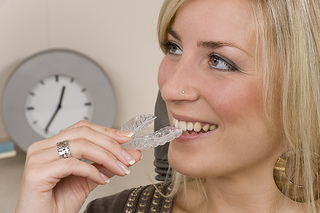
Dr. Todd Hamilton and Dr. Bryan Whitecotton and our team know it is natural for you to feel some concern when you need to wear any type of dental device to correct a problem with your teeth. Both braces and Invisalign can produce good results in giving you the smile you’ve always wanted. Both methods can straighten your teeth and alleviate such issues as crowding, spacing, cross bite, overbite, and underbite. Both methods of treatment have a similar cost.

You can take a cross-country road trip in a ten-year-old economy car or you can make the trip in a brand-new luxury sedan. Both will get you to your destination, but you will be far more comfortable traveling in the luxury sedan. Similarly, your journey to a great smile is much more comfortable and convenient with Invisalign as opposed to braces.

Comfort

Some of the discomfort you may experience with braces is greatly reduced with Invisalign. Because Invisalign is custom-fit to your mouth and made of plastic, you will feel less pain, irritation, and soreness. Unlike braces, there are no food restrictions; you can eat anything that is on your diet.

Brushing and flossing

Of course you will want to brush and floss your teeth to prevent plaque buildup, tooth discoloration, and dental decay. If you wear braces, these simple tasks can become quite a challenge. Invisalign aligners are very easy to remove and replace, so you can brush or floss like normal without having to work your way around any metallic framework covering your teeth.

Appearance

You do not have to be embarrassed to show your teeth when you are using the Invisalign system. Since the aligners are practically invisible, no one will even notice you are wearing them! Whether you are a teenager or an older adult, you can live your life normally.

If you want to learn more about Invisalign, or are wondering what your treatment options are at Hamilton and Whitecotton Orthodontics, feel free to give us a call at our convenient Denver, NC office!

Let It Snow!

January 6th, 2021

The weather out there might be frightful for most of us, but not for you! You’ve been waiting all year for a fresh coat of powder and all the outdoor sporting activities winter brings. But before you grab those ski poles, strap into that snowboard, lace up those skates, or dust off that sled, be sure to remember one more essential piece of gear—your mouthguard!

Mouthguards aren’t just for contact sports. While all that lovely new snow looks like powder, it doesn’t feel like it when you land hard. If there’s a chance of a fall or an impact in any sport, there’s a chance you can suffer dental injuries.

Falls or collisions can result in chipped, broken, or dislodged teeth. Your mouthguard will help protect your smile from these accidents, and also works to protect you from biting your tongue and mouth in case of impact. It can even reduce the chance of jaw injuries.

Luckily, finding a mouthguard that works for you is even easier than finding the perfect board or the best wax for your skis. You have several options to choose from:

  • Ready-made appliances. These are available in drugstores and sporting goods stores, but come in pre-formed sizes, so they might not provide the best fit.
  • The “boil-and-bite” model. This mouthguard form is placed in hot water. You then bite down while it is pliable to shape it to your mouth and teeth.
  • Custom mouthguards. These guards can be fabricated just for you. They are molded to fit your individual mouth and teeth, so provide a better fit and better protection. They are also usually more durable and more comfortable. If you wear braces, a custom mouthguard can be your best option for preventing an injury to your mouth and your braces. Talk to Dr. Todd Hamilton and Dr. Bryan Whitecotton if you are interested in a guard fitted specifically for you.

When you visit our Denver, NC office, let’s discuss all the best ways to keep your teeth and mouth protected before you set out for winter sports. And then when you’re ready to go? Let it snow!

Toothbrush Science

December 16th, 2020

Let’s talk science! From the vastness of the cosmos to sub-atomic particles, science helps us understand the world around us and how it works. So, let’s take some familiar scientific fields of study and apply them to your toothbrush.

My toothbrush?

Yes, indeed! When it comes to your oral health, your toothbrush is the first line of defense, so understanding how and why it works so well might help us use this handy tool even more effectively.

Biology—the study of living organisms

Unfortunately for your toothbrush, the living organisms we’re talking about here are the bacteria which cause tooth decay and those which can lead to illness. How do these problems arise, and how do we prevent them?

Fight Plaque

Plaque is the sticky film that builds up on teeth, and millions of oral bacteria help make up this biofilm. These bacteria convert sugars and other carbohydrates in the foods we eat into acids. And these acids erode our tooth enamel, leading to tooth decay. (More on this when we get to Chemistry.) The best ways to get rid of plaque?

  • Brush often. The recommended minimum is two minutes of brushing twice a day, but when you’re having orthodontic work done, it’s even more important to banish the plaque that can stick to your braces or inside aligners. Ask us what brushing schedule is best for you.
  • Try an electric toothbrush. For some people with braces, cleaning the teeth is easier and more thorough with an electric brush.
  • Replace your brush regularly. Brushes become worn and frayed after three or four months, and you won’t be brushing as effectively.

Stop Germs from Spreading

  • Don’t share. Sharing toothbrushes can lead to an increased risk of colds and infections.
  • Rinse thoroughly after brushing, making sure you remove any toothpaste or debris left after you brush.
  • Store the brush upright and let it air-dry. Covering the brush or keeping it in a closed container can promote the growth of bacteria more easily.
  • Keep different brushes separate when they’re drying to avoid cross-contamination.
  • Replace your brush regularly!

Chemistry—the study of what makes up substances, their properties, and how they interact

When it comes to improving your brushing chemistry, the best thing you can do for your toothbrush is to put a dab of fluoride toothpaste on it! Why fluoride? Let’s look at the chemistry of tooth enamel.

Tooth enamel is the strongest substance in our bodies—even stronger than bone. But it is not indestructible, and acidic substances can dissolve the mineral bonds which give our enamel its strength, whether they come from the bacteria in plaque or are found in our favorite foods and drinks (sodas, coffee, tomatoes, and citrus are among the tasty, but acidic, culprits).

The enamel in our teeth contains calcium and phosphate ions, minerals which help make it the strongest substance in our bodies. But when the level of acidity in our mouths becomes too high, these minerals begin to dissolve. Eventually, teeth become pitted, bacteria can penetrate more deeply, and decay is the result.

So what can we do? While our saliva helps neutralize acidity naturally, and we can cut back on acidic foods in our diets, using fluoride toothpaste actually helps restore the strength of our enamel in a process known as “remineralization.”

Fluoride works on the surface of enamel to both attract and anchor calcium ions, reducing mineral loss and strengthening the weakened enamel. Fluoride also interacts with the calcium and phosphate compound to create a new compound that is even stronger and more acid-resistant.

When you brush with fluoride toothpaste, you help replace and restore the mineral composition of your enamel—and there’s evidence that fluoride might even interfere with oral bacteria’s ability to produce acid. Now that’s good chemistry!

Physics—the study of matter and energy and their interactions

The matter here is your tooth enamel, and the energy is the force you use when brushing. And this is one time the force should not be with you.

  • Over-vigorous brushing can not only damage your brackets, but can also irritate delicate gum tissue and wear down enamel. A “sawing” back-and-forth motion is both hard on your enamel and misses plaque and debris between the teeth. We’ll be happy to show you the safest and most effective way to brush with braces. Just remember, “Massage, don’t scrub.”
  • A soft toothbrush is almost always your best option when you use a manual brush, but if you’re still a heavy-handed brusher, or have sensitive teeth and gums, consider an electric model. An electric toothbrush should provide a continuous brushing motion without needing any heavy pressure from the brusher. Some models will even let you know when you are brushing too hard.

Brushing harder is not brushing better, and your teeth, gums, and braces will be heathier with careful brushing habits. If you need tips on brushing with braces, contact our Denver, NC office and ask!

There’s a lot of science in the simple act of brushing, but we don’t need to spend hours studying to get a passing grade in dental health. The things you do normally—brushing at least two minutes twice a day, using fluoride toothpaste, and applying proper brushing technique—will help create a smile which will earn you top marks from Dr. Todd Hamilton and Dr. Bryan Whitecotton for a lifetime!

(704) 822-0320